OmniPost Home

Category

Logistics Strategy

18 articles

When the System Says Yes and the Warehouse Says No: Closing the Inventory-to-Shipment Gap

When the System Says Yes and the Warehouse Says No: Closing the Inventory-to-Shipment Gap

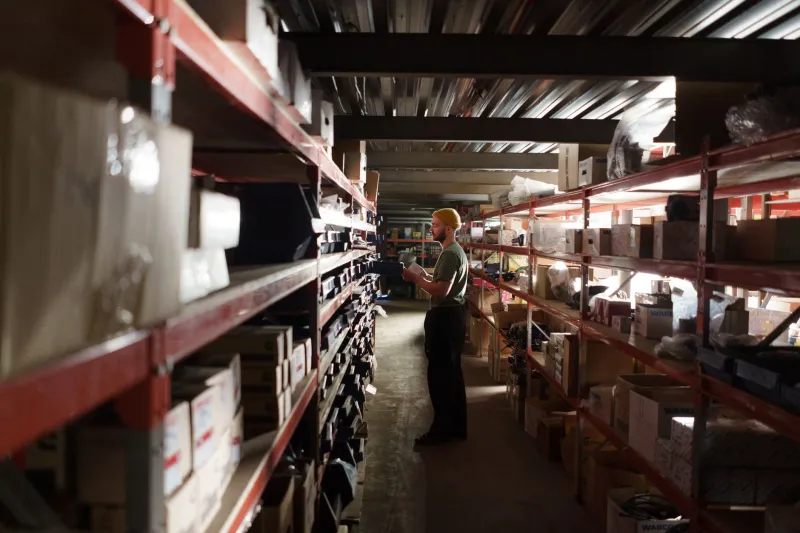
A confirmed order and an available SKU should be the beginning of a seamless fulfillment journey — yet for thousands of US retailers, that moment is precisely where delivery failures are born. The gap between what inventory management software reports and what warehouse staff can physically locate is wider, and more costly, than most operations leaders acknowledge. Understanding where the digital-to-physical handoff breaks down is the first step toward fixing it.

Your Shipments Are Feeding Someone Else's Business Model

Your Shipments Are Feeding Someone Else's Business Model

Every package you hand off to a major carrier generates a stream of behavioral and demographic intelligence that rarely flows back to you. Understanding who profits from that data — and how — is no longer optional for businesses serious about protecting their competitive position.

The Address That Leads Nowhere: Hidden Delivery Dead Zones Inside Valid ZIP Codes

The Address That Leads Nowhere: Hidden Delivery Dead Zones Inside Valid ZIP Codes

A confirmed mailing address is not a delivery guarantee. Across the United States, thousands of technically valid locations are operationally unreachable for standard carrier networks—and most shippers never discover the problem until a customer is already upset. Understanding how these dead zones form, and how to engineer around them, is one of the more consequential logistics challenges that rarely appears on a dashboard.

Nobody's Package: How Responsibility Disappears at Every Transfer Point in the Shipping Chain

Nobody's Package: How Responsibility Disappears at Every Transfer Point in the Shipping Chain

When a package moves between carriers, fulfillment partners, and last-mile providers, ownership of the shipment changes hands—but accountability rarely follows. The result is a costly gray zone where lost goods, damaged freight, and unresolved customer complaints fall squarely on the retailer. Understanding how to close these gaps is no longer optional for serious shipping operations.

When Predictability Becomes a Liability: The Hidden Fulfillment Cost of Subscription Commerce

When Predictability Becomes a Liability: The Hidden Fulfillment Cost of Subscription Commerce

Subscription-based businesses assume that predictable order volume translates into predictable shipping costs — but the operational reality tells a different story. Recurring shipments introduce a distinct set of logistics pressures that standard fulfillment infrastructure was never built to absorb. Understanding why subscription economics break traditional models is the first step toward restructuring them.

The Handoff Problem: What Your Carrier Stops Tracking the Moment It Matters Most

The Handoff Problem: What Your Carrier Stops Tracking the Moment It Matters Most

The final stretch of any shipment is where operational visibility collapses most dramatically — and where customer trust is won or lost. Despite sophisticated tracking infrastructure at the network level, shippers routinely discover that their logistics partners hold far less actionable data about final-mile delivery than anyone is willing to admit. Understanding this gap is the first step toward closing it.

Same Platform, Different Rules: Why Wholesale and DTC Shipping Cannot Share the Same Operational Playbook

Same Platform, Different Rules: Why Wholesale and DTC Shipping Cannot Share the Same Operational Playbook

Retailers who apply their direct-to-consumer shipping logic to wholesale and distribution channels are quietly eroding margins and straining partner relationships. B2B delivery operates under a fundamentally different set of constraints — volume thresholds, appointment windows, and cost expectations that consumer-facing frameworks were never designed to accommodate. Building separate operational pathways for each channel is no longer optional; it is a prerequisite for competitive logistics.

One Product, Four Platforms, Zero Coordination: The Hidden Logistics Crisis Inside Omnichannel Retail

One Product, Four Platforms, Zero Coordination: The Hidden Logistics Crisis Inside Omnichannel Retail

When a business sells the same product across a website, a marketplace, a social storefront, and a physical location without synchronizing inventory and fulfillment data, the result is not growth — it is controlled chaos. Oversold stock, conflicting carrier assignments, and frustrated customers are symptoms of a deeper structural failure. This article examines why omnichannel ambition so frequently collapses at the logistics layer and what it takes to build a fulfillment architecture that actual

Borrowed Infrastructure, Borrowed Time: Why Marketplace Fulfillment Is Not a Long-Term Shipping Strategy

Borrowed Infrastructure, Borrowed Time: Why Marketplace Fulfillment Is Not a Long-Term Shipping Strategy

Selling through Amazon or Walmart Marketplace grants access to world-class fulfillment networks, but that convenience comes with a hidden cost to your brand's long-term independence. When platform algorithms dictate your delivery standards, your direct-to-consumer channel suffers the consequences. This article examines how businesses can reclaim control of their shipping operations without sacrificing the performance benchmarks customers now expect.

The Final Fifty Miles: Why Operational Excellence Collapses Before It Reaches the Front Door

The Final Fifty Miles: Why Operational Excellence Collapses Before It Reaches the Front Door

Shippers invest heavily in warehouse efficiency, inventory precision, and procurement optimization — then watch that investment unravel in the last leg of delivery. The final fifty miles expose structural vulnerabilities that upstream improvements simply cannot fix. Understanding why last-mile logistics demands its own strategic framework is no longer optional for serious operators.

The Return Trip Pays Dividends: Transforming Reverse Logistics Into a Strategic Asset

The Return Trip Pays Dividends: Transforming Reverse Logistics Into a Strategic Asset

Most retailers treat returns as an unavoidable drain on margin—a back-office headache to be managed and minimized. A closer examination reveals that well-designed reverse logistics operations can improve customer lifetime value, reduce fraud exposure, and generate actionable data that strengthens the forward supply chain. The question is not whether to invest in return management, but how quickly to start.

Crossing Borders Without Crossing Wires: A Domestic Shipper's First Guide to Global Logistics

Crossing Borders Without Crossing Wires: A Domestic Shipper's First Guide to Global Logistics

Expanding into international markets is one of the most consequential decisions a US-based business can make—and one of the most logistically complex. From customs compliance and duty structures to carrier selection across unfamiliar regions, the variables that derail global shipping ambitions are numerous and often invisible until they are already costing money. This guide walks domestic-first businesses through the practical framework for entering global markets without sacrificing the operati

Penny-Wise, Pound-Foolish: The True Cost of Chasing the Lowest Shipping Rate

Penny-Wise, Pound-Foolish: The True Cost of Chasing the Lowest Shipping Rate

Selecting a carrier based solely on the lowest per-package rate is one of the most persistent and damaging myths in e-commerce fulfillment. When failed deliveries, customer service escalations, and brand erosion are factored in, the cheapest option on paper frequently becomes the most expensive decision in practice. This piece dismantles the rate-first mindset and makes the case for a more complete accounting of shipping costs.

Leveling the Playing Field: A Small Business Guide to Multi-Carrier Shipping Strategy

Leveling the Playing Field: A Small Business Guide to Multi-Carrier Shipping Strategy

Amazon's logistics dominance can feel insurmountable, but small and medium-sized businesses have more tools at their disposal than they may realize. By strategically diversifying across multiple shipping channels — from USPS and UPS to regional carriers — independent retailers are discovering that smart logistics can be a genuine competitive advantage. This guide breaks down exactly how they are doing it.